Inkline Town
A town-builder drawn in thin ink lines: be mayor for a term and keep the town fed, housed and standing.
- Genre
- Simulation
- Type
- Game the creator's word
- Length
- A term of 45, 60 or 90 minutes, and the same town can stand for another
- Players
- Single-player
- Plays on phones
- Yes
- Gamepad
- Not checked yet
- Price
- Free
- Account
- Not needed
- Released
- October 2026
- Verified playable
- Creator
- Sandro Maglione @SandroMaglione
- Added
How it was built
Inkline Town was built by Sandro Maglione with Claude Opus 5.5 and Claude Fable 5.2. Build time: 2 days to something playable, then 6 more for content, fun and balance. It runs on PixiJS, WebGPU and WebGL. Released in October 2026.
AI-built. Sandro Maglione wrote a long essay on how this game and another, Spirit Call, were made (published Nov 4, 2026, revised Nov 9). Its claim is that they did not write a line of the code and did not read one either: their editor was a chat with an agent, a link to play the game and a page of 3D model previews, and their work was sending text and screenshots. By the essay the start was fast. A style reference found on X was recreated in five minutes, a working town simulation followed ten minutes later, a town was playable within the first hour, and the first two days gave something playable; six more days went on content, fun and balance, and three quarters of the game's commits came after those first two days. The creator plays for about 45 minutes as a player and reports what they see, never how to fix it. The essay's example is the fishery: one fishery fed a town more cheaply than the three buildings bread needs, the bots that had played the economy since day one never noticed, and the fix began with asking the agent for a model of the whole economy, which found twelve broken rules. What makes unread code trustworthy, they write, is layers of checks that run before a change reaches them: types, tests that play the game without graphics, lint rules, recorded play sessions. Those are collected in Ritmo, a TypeScript runtime the creator built alongside the games. The essay does not name the model. The public repository does: of its 164 commits that are not merges, dated Oct 12 to Nov 20, 2026, 143 carry a co-author line for a Claude model, Claude Opus 5.5 on 131, Claude Fable 5.2 on 11 (the translations added on Nov 20) and Claude Fable 5.1 on one; one other commit came from an outside contributor. In a reply on launch day the creator said the game used three.js and that the assets were made through Blender's MCP connection; the README says there are no sprites or image files and every picture is drawn in code. On Nov 14 they posted that the game had moved from three.js to PixiJS 3D, running on WebGPU, and linked the pull request, which sets out the move with measurements and says WebGL is used where WebGPU is missing. The code is under the Apache 2.0 licence. The README says the game runs on a computer or a phone. It launched at another address and moved to this one on Nov 3, by the repository's history. It draws with WebGPU, and the first load is 0.7 MB.
Source for this claim ↗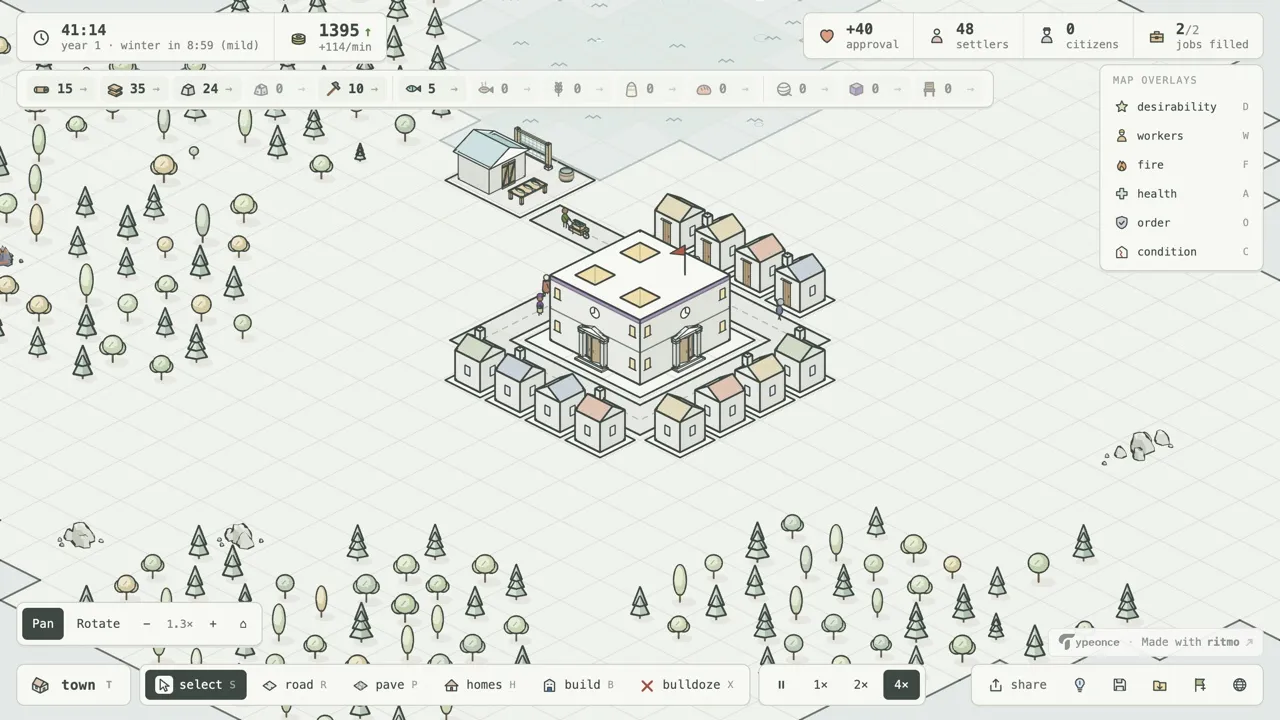
A town-builder drawn live in thin 3D line art on a pale ground. You are the mayor for a term of 45, 60 or 90 minutes on an island you choose by size and richness. You lay roads, drag rows of homes along them and place workplaces; you never move a crate yourself, because carriers push carts along the roads and walkers hand out food. Settlers pay taxes once they are fed; bread, cloth and a chapel turn cottages into citizens' homes, and a hamlet that holds its goals rises to a village, a town and a city. Winters thin the catch, the crown asks for goods on a deadline, and a term can be lost to debt, uproar, ignored requests or a town that empties out. A guide walks you through the founding, and each building's panel says what it has and what holds it back: a fishery on a shore that is already fished out says so. Everything hangs on the roads, since a building site that the carriers cannot reach is never built, and a town with no fire watch can lose most of its homes to one fire. The clock can be run at four times speed, and a term ends with a score, a chart of how it went and a chronicle of what went wrong.
- Creator's essay on building Inkline Town and Spirit Call without writing or reading code (Nov 4, 2026, revised Nov 9) ↗
- The game's repository: README, with the rules of a term and the licence (Apache 2.0) ↗
- The repository's commits and their co-author lines (Oct 12 to Nov 20, 2026) ↗
- How to play, in the repository: controls, how a term ends, how buildings and carriers work ↗
- Creator's launch post (@SandroMaglione on X, Oct 13, 2026) ↗
- Creator's reply: three.js, and assets through Blender's MCP (X, Oct 13, 2026) ↗
- Creator's post on the move to PixiJS 3D and WebGPU (X, Nov 14, 2026) ↗
- The pull request for that move, with its measurements ↗
- The game's own page: the charter, the guide, the building panels and the end-of-term reckoning ↗
More like this
All games-
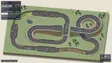 Tabletop Grand Prix Demo A half-minute time-attack lap on a toy track, raced against ghosts of other players' laps from a world leaderboard Driving PixiJS · WebGPU AI-built: Yes
-
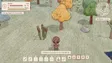 Brushwild An open-world action RPG drawn in pen and coloured pencil by shaders: four classes, loot, dungeons and land with no edge RPG WebGL AI-built: Yes
-
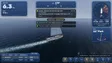 Windtrim A sailing simulator with real sail trim: lessons, a story voyage, timed challenges, races against bots and online play Simulation Three.js · WebGL AI-built: Not stated